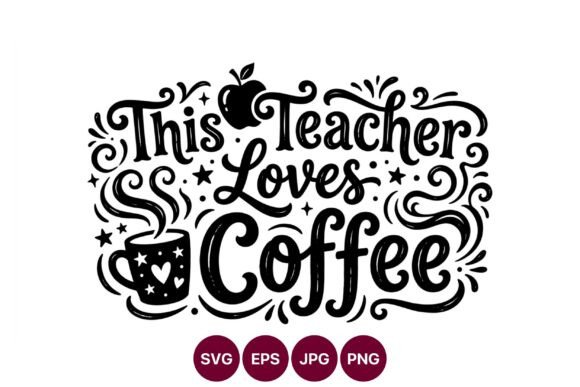
Review: This Teacher Loves Coffee Script for Embroidery
As a designer who spends more time staring at digitized files than I care to admit, I have learned that not every pretty graphic translates well to thread. We often browse marketplaces looking for the perfect Illustrations or Graphics, drawn in by clever typography and cute icons. But when it comes time to load the file into our machines, the reality can be quite different. Today, I am taking a close, practical look at This Teacher Loves Coffee Script. This is not just a visual critique; it is an evaluation of how this design holds up when subjected to the mechanical realities of embroidery, from hoop tension to fabric texture.
First Impressions: Mood and Visual Personality
The first thing that strikes me about This Teacher Loves Coffee Script is its approachable, handwritten aesthetic. It captures that specific, cozy vibe associated with educators who rely on their morning brew to survive the school day. The combination of the script text with decorative swirls, stars, an apple, and a steaming cup creates a balanced composition. It feels personal rather than corporate, which is exactly what you want for a personalized gift or a boutique item.
From a layout perspective, the elements are clustered in a way that suggests unity. The steam from the cup likely connects visually to the swirls, creating a natural flow for the eye. However, as an experienced reviewer, my immediate concern is always detail density. Handwritten scripts can be tricky. If the lines are too thin, they may disappear under the stitch coverage or break easily during washing. The black and white preview provided in the digital embroidery file package allows us to see the contrast clearly, but we must imagine how those lines translate to satin stitches or running stitches on actual fabric.
Real-World Application: Where This Design Shines
I recently considered using a similar concept for a custom order involving teacher appreciation gifts. The client wanted something that felt handmade but professional. This Teacher Loves Coffee Script fits this bill perfectly for several specific applications.
For sweatshirt embroidery, this design would look fantastic on the left chest area. The script style complements the casual nature of fleece or cotton blends. Because the design includes iconic elements like the apple and cup, it remains recognizable even if the text is slightly obscured by the garment's texture. It also works beautifully as a tote bag design. Canvas bags provide a stable, flat surface that allows the intricate swirls and stars to stitch out cleanly without distortion.
Another strong candidate for this artwork is the embroidered patch. Patches allow you to control the background fabric completely, ensuring that the black and white nature of the original Illustrations translates well into high-contrast thread colors. You could use white thread on a black patch backing, or vice versa, creating a striking visual that stands out on a backpack or jacket.
Navigating Technical Challenges
While the design is charming, we must address where it requires caution. Embroidery is a physical medium, and physics dictates what is possible. The primary challenge with script fonts and delicate decorative elements like stars and swirls is stitch density and size.
If you plan to use this on a cap or hat, be wary. Curved surfaces distort designs. The swirling elements might pull or pucker if the stabilizer is not robust enough. Furthermore, tiny details like the steam lines or small stars can become lost if the design is scaled down too much. I always recommend testing the design on scrap fabric first, specifically at the size you intend to sell. Check if the satin stitch width is appropriate for the thread weight you are using. If the letters are too narrow, they may look like solid blocks of thread rather than elegant script.
Fabric choice is equally critical. On textured fabrics like terry cloth towels or rough linen, fine details can get swallowed up. For a kitchen towel or apron, ensure you are using a sharp needle and possibly a lighter thread weight to maintain clarity. Conversely, on stretchy fabrics like performance tees, the decorative swirls could cause instability if not properly backed with a cut-away stabilizer.
File Formats and Preparation
The product description notes that the download includes a ZIP folder with SVG, PNG, JPG, and EPS files. This is a crucial distinction for us as makers. These formats indicate that This Teacher Loves Coffee Script is primarily sold as vector and raster graphics, not necessarily as a pre-digitized machine embroidery file (such as DST, PES, or JEF).
This means if you are an Etsy seller or run a craft business, you will need to digitize this artwork yourself or hire a digitizer before you can stitch it out. This is actually a benefit for professional designers, as it allows you to control the stitch density, underlay, and stitch types. You can decide whether the apple uses a fill stitch for solidity or a running stitch for a sketch-like effect. However, for hobbyists without digitizing software, this adds a step. Always confirm licensing terms before selling finished items or using the design assets commercially.
Enhancing Visual Appeal and Product Value
When executed correctly, this design adds significant value to a handmade product. The theme is evergreen; teachers always love coffee, and the school year is annual cycle of gifting. Using high-quality thread colors can elevate the piece. While the source art is black and white, do not feel bound to monochrome stitching. A rich brown for the coffee cup, a vibrant red for the apple, and a soft grey for the steam can add depth and realism.
For commercial embroidery projects, consistency is key. If you are producing multiple items for a school staff, ensure your hoop size and placement are identical for each piece. Use templates or laser guides to position the script perfectly. A well-placed design signals professionalism and builds customer trust. Buyers of custom apparel are paying for the perceived quality of the finish. Loose threads, puckering, or misaligned elements detract from the charm of the script.
Practical Designer Notes for Success
To get the best results with This Teacher Loves Coffee Script, follow these practical steps:
- Test on Scrap Fabric: Never stitch directly on your final garment. Run a test on the same material to check for puckering or thread breaks.
- Check Contrast: Ensure your thread color contrasts sufficiently with the fabric. Dark thread on dark fabric will hide the intricate swirls.
- Review Stitch Density: If you are digitizing, avoid excessive density in the script letters to prevent stiffness.
- Confirm Hoop Size: Make sure the design fits comfortably within your hoop with adequate margin for clamping.
- Inspect Small Details: Zoom in on the stars and steam. If they are too small, consider simplifying them or enlarging the overall design.
- Use Proper Stabilizer: Match your stabilizer to your fabric. Cut-away for knits, tear-away for wovens.
- Verify Licensing: Before listing on Etsy or selling at craft fairs, read the license agreement included with the ZIP file to ensure commercial use is permitted.
In conclusion, This Teacher Loves Coffee Script is a versatile and charming piece of artwork that holds great potential for embroidery projects. It bridges the gap between digital Graphics and tangible finished product appeal. By respecting the technical limitations of the medium and preparing your files with care, you can create items that resonate with customers and stand up to daily wear. Whether for a holiday embroidery gift or a year-round small shop product, this design offers a solid foundation for creative expression.